




Back to Parent
Home Sales & Support 润滑剂常见问题解答

Lubricant FAQ

1-25122309304J51.jpg

Basic Differences Between Lubricating Oils and Greases

Comparison Item
Lubricating Oil
Grease
Form
Liquid, good fluidity
Semi-fluid or semi-solid paste, with adhesiveness
Composition
Base oil (approx. 90%) + additives (approx. 10%)
Base oil (70%–90%) + thickener (8%–30%) + additives (
Heat dissipation capability
Good; heat can be carried away through circulation
Poor; not conducive to rapid heat conduction
Sealing and dust protection
Fair
Good; effectively isolates moisture, dust, and impurities
Application scenarios
High-speed or circulating lubrication points such as engines, gearboxes, and hydraulic systems
Low-speed heavy-duty bearings, locations requiring long-term lubrication and difficult to replace

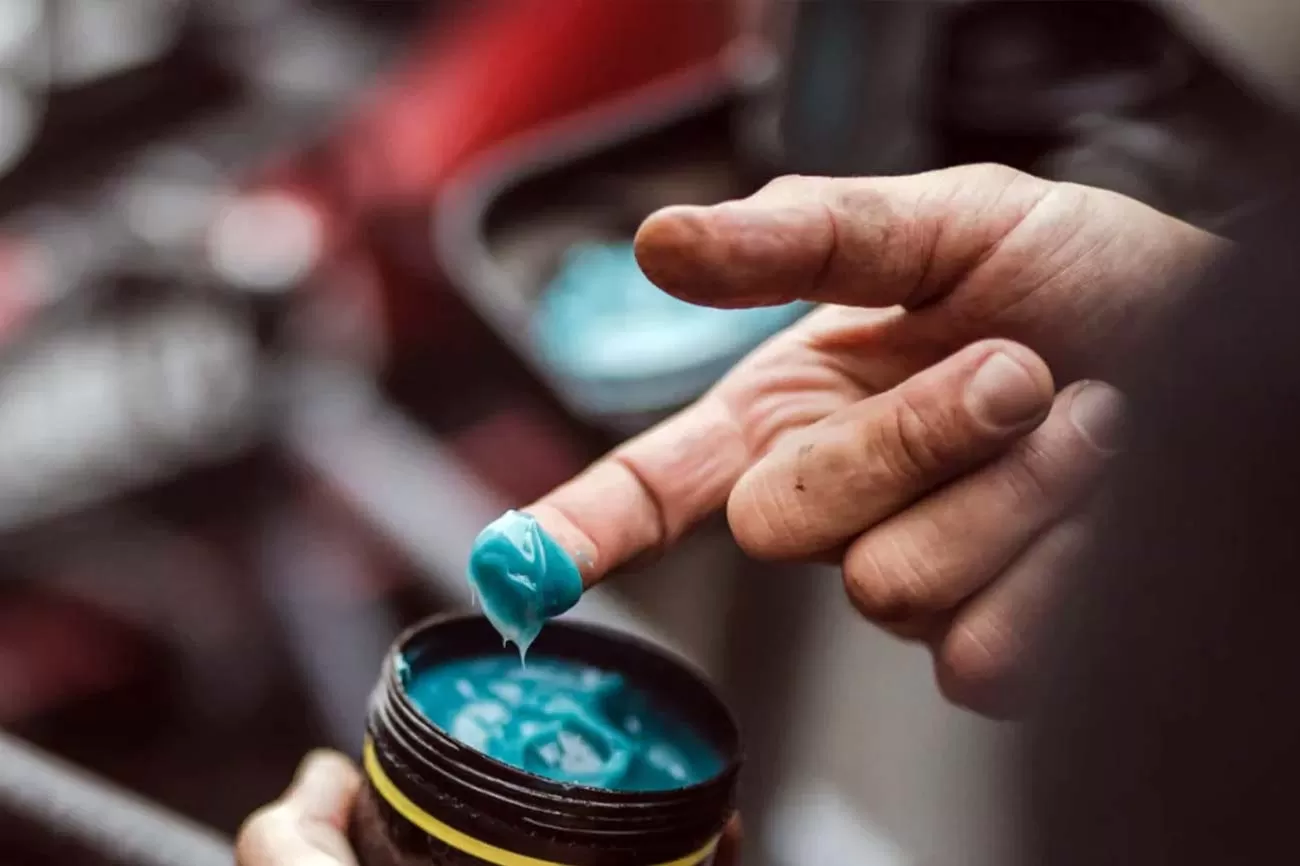
Grease can be understood as lubricating oil with a thickener added (similar to a sponge structure), which adsorbs and locks the base oil in a three-dimensional network, serving to hold and slowly release the lubricating oil; its lubricating performance mainly depends on the quality of the base oil.


The eight major functions of lubricants

Cooling and heat dissipation—preventing friction-generated heat from raising component temperatures, avoiding aggravated adhesive wear and corrosive wear; sealing protection—isolating moisture, oxygen, and harmful media in humid air, preventing leakage of internal media; cleaning dirt—carrying away abrasive particles generated by friction and external impurities, reducing wear; reducing friction and wear—forming a lubricating film to lower the friction factor between two moving parts; rust prevention—protecting metal surfaces from corrosion; vibration damping—providing damping and vibration absorption; reducing power consumption—improving equipment operating characteristics and extending equipment life; power transmission—transmitting power in equipment such as hydraulic systems.


Composition of lubricating oil

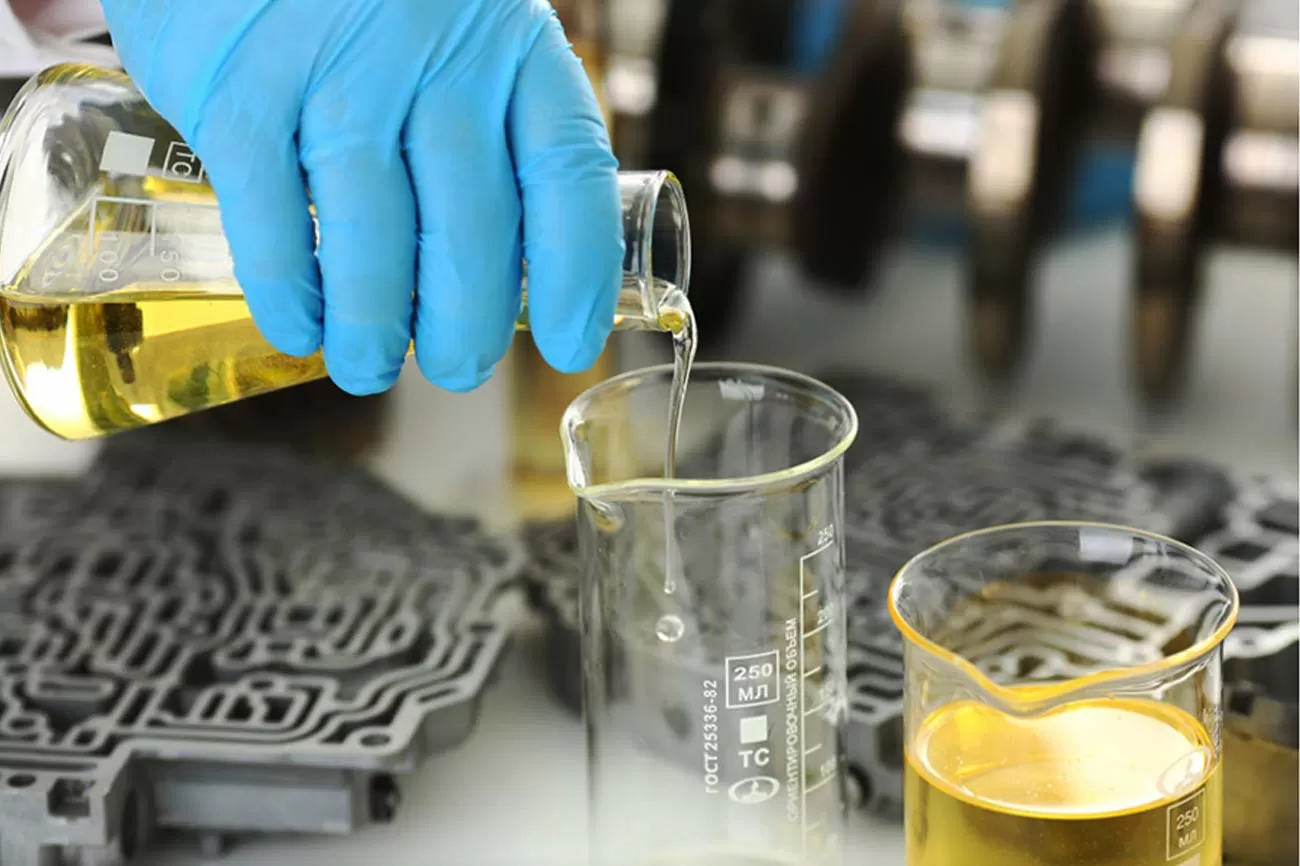
Lubricating oil consists of base oil and additives. Base oil is the main component and determines the basic properties of the lubricating oil; there are four main categories: paraffinic, naphthenic, aromatic, and synthetic. In engine oil, base oil typically accounts for about 90%, and its quality is crucial to performance, providing the most fundamental lubrication and cooling functions. Additives are used to compensate for and improve the deficiencies of base oil and impart new properties; common ones include anti-wear agents, antioxidants, rust inhibitors, detergent dispersants, viscosity index improvers, and more.


Factors to consider when selecting lubricating oil

Movement speed—at high speeds, low-viscosity oil is suitable; at low speeds, high-viscosity oil can be used; operating temperature—at high temperatures, oil with higher viscosity or good oxidation resistance should be selected; load conditions—when bearing heavy loads or impact loads, oil with high viscosity or good extreme-pressure performance should be selected; fit clearance—when the clearance of the moving pair is large, high-viscosity oil should be selected; when the clearance is small, low-viscosity oil should be selected; surface roughness—when roughness is high, high-viscosity oil should be selected; otherwise, low-viscosity oil should be selected; working environment—in humid conditions or with chemical media, oil with good demulsibility or corrosion resistance should be selected.


Suitable applications for common greases

Grease types
Main Features
Operating Temperature Range
Applications
Calcium-based Grease
Good water resistance, not resistant to high temperatures
-10℃ ~ 60℃
Humid environments or parts in contact with water, such as agricultural machinery and water pump bearings
Sodium-based Grease
High temperature resistance, not water resistant (emulsifies on contact with water)
-10℃ ~ 110℃
Dry high-temperature environments, such as motor bearings and fan bearings
Lithium-based grease
Combines heat resistance and water resistance, with good versatility
-20℃ ~ 120℃
General-purpose applications such as most industrial bearings, motors, and automotive wheel hubs
Extreme-pressure lithium grease
Contains extreme-pressure additives, resistant to heavy loads
Depends on base oil
Heavy-duty gears, rolling mill bearings, mining equipment
Molybdenum disulfide lithium grease
Contains molybdenum disulfide, extreme pressure and vibration resistance
Depends on base oil
Impact load, vibration, or low-speed heavy-load locations
Complex calcium-based grease
High temperature resistance, high load
-20℃ ~ 150℃ and above
High-temperature and high-load conditions, such as continuous casting machine and sintering machine bearings
Urea-based grease (polyurea grease)
Long life at high temperature, good oxidation stability
-20℃ ~ 180℃
High-temperature, long-life maintenance-free applications, such as sealed bearings

Key Points for Selecting Lubricating Grease Based on Operating Conditions

In addition to referring to the equipment manual, actual operating conditions must also be comprehensively considered:

  • Sodium-based grease should not be used in humid environments (it easily emulsifies and washes away when exposed to water); calcium-based or lithium-based grease should be selected instead;

  • For parts in contact with acidic gases, grease with good acid resistance should be selected;

  • In high-temperature environments, grease with a dropping point at least 20–30°C higher than the operating temperature should be selected;

  • For heavy loads and low speeds, select a high-viscosity base oil with extreme pressure additives and slightly higher consistency (NLGI No. 2 or No. 3);

  • For high speeds and light loads, select a low-viscosity base oil and lower consistency (NLGI No. 1 or No. 2) to avoid oil churning and heat generation;

  • Centralized lubrication systems require NLGI No. 00 or No. 1 grease with good pumpability.


Selection of Grease Grades (NLGI Numbers)

Lubrication Method or Usage Requirements
Recommended Grades (Penetration Grades)
Centralized Lubrication System (Pump Required)
Grade 00 or Grade 1
Manual application with grease gun or grease cup
Grade 1, Grade 2, or Grade 3
Sealed areas with long-term use without grease replacement
Grade 2 or Grade 3 (thicker, less prone to loss)
General Rolling Bearings
Grade 2 or Grade 3
Open Gears or Gearboxes
No. 0 or No. 1 (softer, easier to penetrate tooth surfaces)

Why equipment temperature rises or wear persists after adding grease

Insufficient grease leads to poor lubrication, increased friction and heat; excessive grease increases churning resistance and impairs heat dissipation; mismatched grease type or poor quality prevents an effective oil film from forming; newly added grease is not distributed quickly and evenly, causing excessive local friction; mixing different types of grease destroys structure or triggers additive reactions, degrading performance; lack of a running-in period—the correct practice is to run at 30%–60% of standard speed for a period after greasing so the grease spreads evenly before running at full speed.


Can grease be diluted with lubricating oil?

No. Grease is a colloidal structure composed of a thickener and base oil. Adding lubricating oil after the grease has formed cannot be evenly dispersed even with stirring, and it easily separates and leaks out during use, causing the grease to lose its adhesion and sealing properties. If a softer grease is needed in winter, choose a lower-numbered No. 1 or No. 2 product directly rather than adding lubricating oil yourself.


Can different types of grease be mixed?

In principle, no. Mixing different thickeners (such as lithium-based and calcium-based) may destroy the colloidal structure, causing the grease to soften or harden; different additives (especially extreme-pressure agents) may react chemically and produce corrosive substances. When changing product types, the old grease should be thoroughly removed, preferably flushed out with the new grease before refilling.


Is more grease always better for wheel hub bearings?

No. If the hub cavity is overfilled with grease, most of it will be thrown onto the cavity wall and cannot participate in bearing lubrication, while increasing churning resistance and raising temperature. Grease melted at high temperature may seep into the brake drum and cause brake failure. The correct practice is "dry hub lubrication"—apply an appropriate amount of grease only to the bearing rolling elements and raceway surfaces, and do not fill the cavity.


Why does grease harden?

High temperatures cause the base oil to evaporate or bleed excessively from the thickener, hardening the grease; centrifugal force from high-speed rotation throws out the base oil, thickening the residual grease; overly long service cycles (over six months to a year) lead to base oil oxidation and volatilization; oil separation occurs under sustained heavy pressure; and prolonged storage or excessively high storage temperatures also accelerate aging. Hardened grease cannot provide adequate lubrication and should be replaced promptly.


Is it normal for lubricating oil to turn black?

Oil turning black usually has three causes: the lubricating oil itself oxidizes and deteriorates; metal powder from equipment wear mixes in; and external contaminants (dust, damaged seals) enter. A slight darkening after a period of use is normal, but it should not become very black (engine oil is an exception—diesel engine oil turns black due to the action of detergent-dispersant additives, which is normal). If the oil turns black rapidly without external contaminants, it may be a quality issue, and you should consider changing the brand or grade.


What causes oil to turn white?

It is generally emulsification after water ingress, turning the oil milky white or cloudy. Water entering the oil destroys the oil film, accelerates oxidation, and causes additives to fail. If whitening is found, immediately check whether the oil seal is damaged, trace the water source, thoroughly clean the system before changing the oil, and store oil drums in a rain-sheltered place.


Can old and new oil be mixed when changing oil?

Not recommended. Old oil contains harmful substances such as wear particles, oxides, and moisture; mixing it with new oil lowers the new oil's grade and shortens its service life. When changing oil, drain the old oil as completely as possible, and preferably flush the system once with new oil before refilling.


Can used lubricating oil be left to settle and then reused?

No. After use, all performance indicators of the oil have declined, additives are depleted, and oxidation products and fine particles cannot be removed by simple settling. Reusing it is equivalent to using a non-compliant product and will aggravate equipment wear.


The "Five Fixeds" of equipment lubrication management

Fixed points — clearly define the location and number of each lubrication point on the equipment; Fixed time — add oil, inspect, and replace oil at specified intervals; Fixed quality — select lubricants of the specified grade and quality according to equipment requirements; Fixed quantity — control the amount added each time to avoid over- or under-lubrication; Fixed personnel — assign dedicated personnel and establish a responsibility system.


Featured Content

If you have any questions, please contact us

Contact an expert to learn more about our products and find the solution that best fits your needs.

Contact Us
We use cookies to improve your online experience. By continuing to browse this website, you agree to our use of cookies

Cookies

Hank Lubricants Cookie Policy

Last Updated: August 8, 2026

  1. Important Notice

Before accessing or using the Hank Lubricants official website (
www.hankoil.com
hereinafter referred to as "this Website") and related services, please carefully read this Cookie Policy as well as our Terms and Conditions and Privacy Policy. If you do not agree to this Policy and the related terms, please do not access or use this Website and services.

This Policy is intended to explain in clear and concise language how we use cookies and similar technologies, and how you can manage your cookie preferences. If there is any inconsistency between the terms of this Policy and any real-time notice on a specific page, the real-time notice shall prevail.

  1. Scope and Updates of This Policy

2.1 Applicable Users

This Policy applies to all users who access and use this Website. If you are located in a jurisdiction outside the European Economic Area, the United Kingdom, or Switzerland (collectively, "European Countries"), by using this Website, you accept the cookie practices described in this Policy.

2.2 Policy Updates

We may revise this policy at any time without individual notice. The revised version will be posted on this page and indicated by updating the "Last Updated" date at the top of this policy. Changes may apply to any personal information we already hold about you prior to the revision, as well as any personal information newly collected after the revision.

If we make material changes to the way we collect, use, or disclose your personal information that substantially affect your rights under this policy, we will notify you in advance via website announcement or email.

If you are located in a jurisdiction outside of European countries, your continued access to or use of this website after receiving notice of changes constitutes your acknowledgment and acceptance of the updated policy. If you do not accept, please stop using this website.

  1. What Are Cookies?

Cookies are small text files that most websites request your browser to store on your device (computer, mobile phone, tablet, etc.) when you visit a website or open certain emails.

The core function of cookies is to help websites recognize your device, remember whether you have visited the website before, and record your actions and preferences on the website.

Cookies themselves typically do not contain information that can directly identify you personally (such as your name or ID number), but they may be associated with personal information you voluntarily provide (such as your name or email address submitted during registration) to help us better serve you.

In addition to cookies, this policy also applies to other technologies that perform similar functions, including but not limited to web beacons, pixel tags, clear GIFs, JavaScript scripts, etc. For ease of reading, this policy collectively refers to the above technologies as "Cookies."

  1. Why Do We Use Cookies?

Cookies are one of the fundamental technologies that keep modern websites running properly. This website uses cookies primarily for the following purposes:

4.1 Basic website functionality: To ensure the core functions of the website (such as page navigation, login verification, access to secure areas, form submission, etc.) operate properly. Without these cookies, this website will not be able to provide services to you normally.

4.2 Remembering your preferences: To record your preferences such as language selection, browsing settings, and form-filling progress, so that you do not need to reconfigure them on your next visit and can enjoy a more convenient experience.

4.3 Statistical analysis of website visits: By collecting data such as page views, traffic sources, visit duration, and user click behavior, we can understand how users interact with this website, thereby continuously optimizing the website structure, content, and user experience.

4.4 Security protection: Used to uniquely identify your device and prevent security risks such as malicious attacks, account theft, and data breaches.

4.5 Personalized content and advertising: We and our third-party service partners may use cookies to provide you with more relevant content or advertising information across the internet.

  1. First-Party Cookies and Third-Party Cookies

Depending on the entity that sets them, cookies are divided into two categories:

5.1 First-party cookies: Cookies set directly on your device by the Hank Lubricants official website (
www.hankoil.com
). This website uses first-party cookies primarily for core purposes such as website functionality, preference memory, and security verification.

5.2 Third-Party Cookies: Cookies set on your device by our partners or third-party service providers. These third parties have their own privacy and cookie policies, and their data collection and use practices are governed by their own policies.

The third-party cookie services currently used on this website include but are not limited to:

  • Baidu Analytics: Used for website traffic statistics, user source analysis, and page click behavior analysis. Third-party privacy policy link:
    https://tongji.baidu.com

  • WeChat Open Platform: Used for social features such as WeChat sharing and WeChat login. Third-party privacy policy link:
    https://weixin.qq.com

Important Note: The cookies and data collection practices of the above third-party services are governed by their respective privacy policies. We recommend that you also review the privacy policies of the relevant third parties to understand their specific practices.

  1. Cookie Categories and Purposes

This website classifies cookies into the following four categories:

6.1 Strictly Necessary Cookies

Purpose: Core cookies essential for the normal operation of the website, used for page navigation, login authentication, security protection, form submission, privacy preference settings, etc.

Can it be disabled: No. These cookies are the foundation for the website's operation.

Does it store personal information: Usually does not store information that can directly identify you personally.

Legal basis: Legitimate interest (necessary for the website's functionality, no consent required).

Note: If such cookies are blocked through browser settings, some or all core functions of this website will not operate properly.

6.2 Functional Cookies

Purpose: To remember your language selection, browsing preferences, form history, and other personalized settings, providing enhanced functionality and a more convenient user experience.

Can it be disabled: Yes. After disabling, some personalized features may not be available.

Does it store personal information: May store some de-identified preference information.

Legal basis: Your consent.

6.3 Performance/Analytics Cookies

Purpose: To collect statistical data such as website traffic, traffic sources, page heatmaps, and user click paths, helping us measure and optimize website performance.

Can it be disabled: Yes. If disabled, we will be unable to obtain website usage data to optimize our services.

Does it store personal information: All information collected is aggregate statistics and does not contain personally identifiable information; it is anonymous data.

Legal basis: Your consent.

6.4 Targeting/Advertising Cookies

Purpose: Set by our advertising partners through this website to build a profile of your interests and show you relevant product ads or content recommendations on other websites and social media platforms.

Can it be disabled: Yes. If disabled, you will still see ads, but they may be less relevant.

Does it store personal information: It is based on uniquely identifying your browser and device and does not directly store personally identifiable information such as your name or address.

Legal basis: Your consent.

  1. Cookie Storage Duration

The storage time of cookies on your device falls into two types:

Session Cookies: These are valid only during your current browser session and are automatically deleted when you close the browser. They are used for scenarios such as maintaining login status and temporary shopping cart records.

Persistent Cookies: These remain on your device after you close the browser until the set expiration date or until you manually delete them. They are used for scenarios such as remembering language preferences and auto-filling login information.

Note: The storage period of persistent cookies depends on the expiration time set for the cookie itself. To learn the specific validity period of a particular cookie, you can check it through your browser's developer tools or a third-party cookie management tool.

  1. How do you manage your cookie choices?

You can manage or restrict the use of cookies in the following ways:

8.1 Cookie preference pop-up management (recommended)

When you first visit this website, a cookie pop-up will be displayed, and you can choose:

  • Accept all cookies

  • Accept only necessary cookies (reject non-essential cookies)

  • Customize your choices (turn functional, performance, and targeting cookies on or off separately)

If you have disabled non-essential cookies, we will still use strictly necessary cookies to ensure the website functions properly.

8.2 Managing Browser Settings

Most browsers allow you to manage or block all cookies through the "Settings" or "Privacy and Security" menu:

  • Google Chrome: Settings Privacy and security Cookies and other site data

  • Microsoft Edge: Settings Cookies and site permissions Manage and delete cookies

  • Mozilla Firefox: Options Privacy & Security Cookies and Site Data

  • Apple Safari: Preferences Privacy Block all cookies

  • Opera: Settings Privacy and security Cookies

Important note: If you block all cookies (including necessary cookies) through your browser settings, some core features of this website will not function properly.

8.3 Managing on Mobile Devices

  • iOS devices (Safari): Settings > Safari > Block Cookies

  • Android devices (Chrome): Chrome browser > Settings > Site settings > Cookies

8.4 Disabling Specific Third-Party Services

Baidu Analytics: You can manage it through your browser settings or by visiting Baidu's privacy protection page.

  1. Cookies in Mobile Applications

If Hank Lubricants provides a mobile application (App), we only use strictly necessary cookies (such as for session management) in the App. These cookies are essential to the App's core functionality:

  • Such cookies are not shared with any other App on your device

  • We never store your personal information in such cookies

  • If you block or delete such cookies through your device settings, the App may not function properly

  1. Do Not Track

Some browsers offer a "Do Not Track" (DNT) feature that sends a request to websites indicating you do not wish to be tracked across sites.

Currently, major internet standards organizations have not yet established a unified standard for responding to DNT signals. Therefore, this website does not currently respond to browser DNT signals. If relevant standards are introduced in the future and widely adopted by the industry, we will adjust this policy in accordance with the latest standards and notify you through timely updates.

  1. Your Rights (Particularly Applicable to Users in the European Economic Area and the United Kingdom)

If you are located in the European Economic Area, the United Kingdom, or Switzerland, you have the following rights:

  • Right to be informed: The right to know how we process your personal information and Cookie data

  • Right of access: The right to access the personal information we hold about you

  • Right to rectification: The right to request correction of inaccurate personal information

  • Right to erasure (right to be forgotten): The right to request deletion of your personal information under certain conditions

  • Right to restrict processing: The right to request restriction of the processing of your personal information under certain conditions

  • Right to data portability: The right to obtain your personal information in a structured, commonly used, and machine-readable format

  • Right to Withdraw Consent: You have the right to withdraw your consent to the use of Cookies at any time.

If you wish to exercise the above rights, please contact us using the contact details in Section 13 of this Policy.

  1. Relationship with Other Policies

This Cookie Policy is an integral part of the Privacy Policy and the Terms and Conditions. In the event of any inconsistency between this Policy and other policies, this Policy shall prevail with respect to the processing of data related to Cookies and similar technologies; the Privacy Policy shall prevail with respect to other personal information processing matters.

  1. Contact Us

If you have any questions, comments, or complaints about this Cookie Policy, you are welcome to contact us through the following channels:

Official Website:
www.hankoil.com

Contact Email: szyilida@qq.com

Customer Service Hotline: +86-400-716-2598

Contact Address: Room 1506, Unit 1, Meilongyuan, Longhua Avenue, Longhua District, Shenzhen, China

We will respond to your request as soon as possible (usually within 30 business days).